

How I built it: Trek Checkpoint ALR gravel bike review
Trek doesn’t offer its alloy gravel frame with a nicer build, so I went ahead and did it myself.

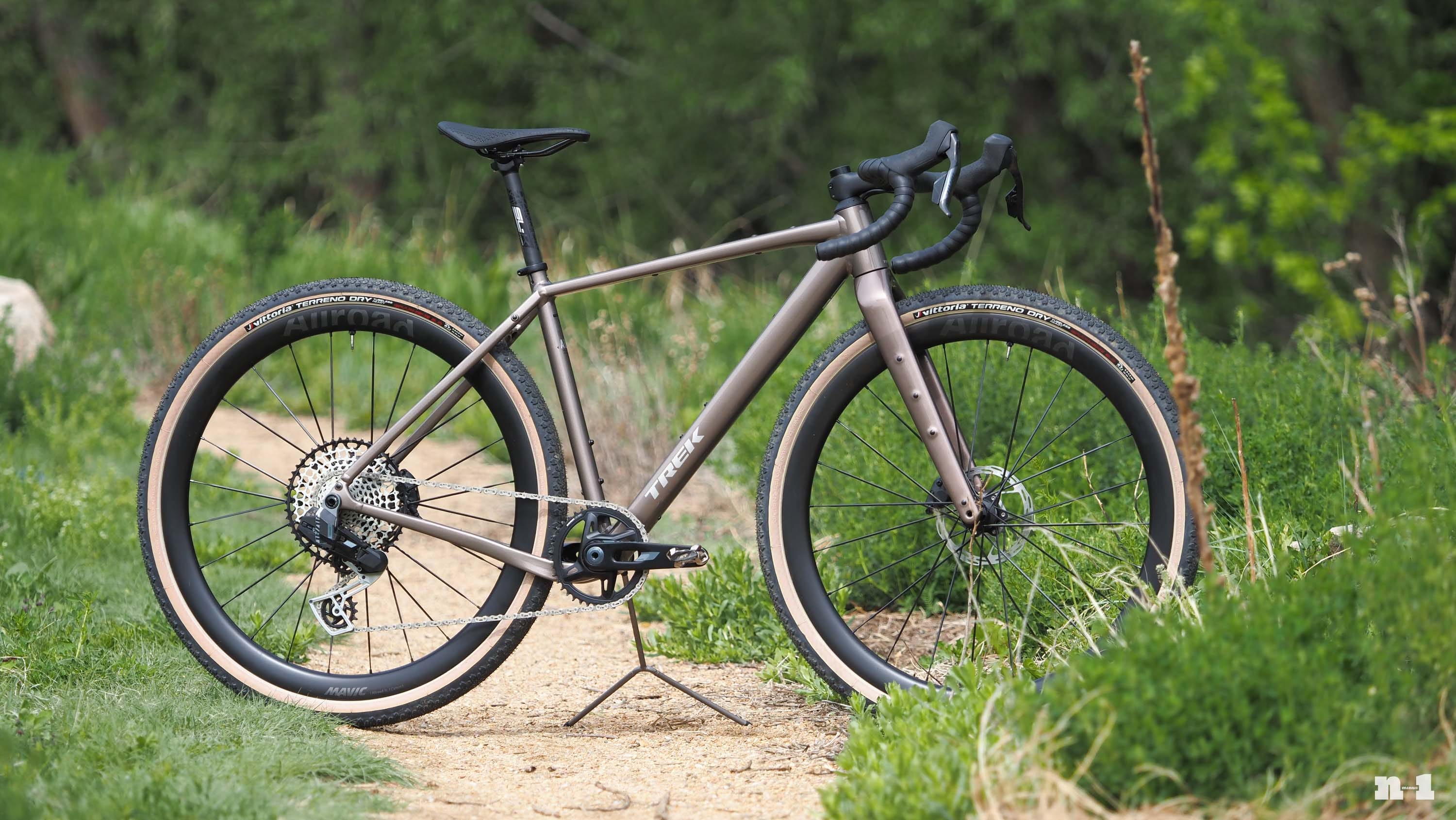
Got champagne taste but only running on a beer budget? Worried about the long-term durability of carbon fiber (or just don’t like the idea of riding on a plastic frame)? While most mainstream brands are continuing to lean even more on composites, there are still some good aluminum options to be had that offer excellent overall performance and some outstanding bang for the buck.
Case in point: Trek’s Checkpoint ALR gravel bike was just refreshed last year with a new hydroformed aluminum frame and full-carbon fork, clearance for tires up to 50 mm-wide, suspension fork and dropper seatpost compatibility, heaps of accessory mounts, and geometry adapted from its more expensive Checkpoint SL carbon cousin.
On paper, the Checkpoint ALR sounds like it could be a performance bargain. The only problem is that given the market’s increasing appetite for carbon over metal bikes, the top-end build is a rather modest setup that leaves a lot of capability left on the table.
Trek hasn’t left performance-minded bargain hunters completely out in the cold, though. The Checkpoint ALR is thankfully still offered as a frameset, and with some careful choices, you can end up with one heck of a bike for not a ton of money.
Pros: Impressively responsive, lighter than claimed, very affordable, looks great, excellent tire clearance, lots of mounts, plenty of versatility.
Cons: Stiffer ride than the carbon version, toe overlap, headset-style cable routing, rough brake mount finishing, take that 50 mm maximum allowable tire size with a small pinch of salt.
The takeaway: A performance sleeper that scores high on value and versatility.
The appeal of aluminum
I’ve been fortunate enough in my career to ride an awful lot of expensive bikes over the years. Most of them are genuinely fantastic, like the Argonaut Supernaut GR3, Enve MOG, Santa Cruz Stigmata, and Allied Able (albeit often in different ways and with some caveats, but fantastic nonetheless). As amazing as they may be, though, it’s also true that many of those bikes aren’t within reach financially for mere mortals with realistic bank accounts (myself included).
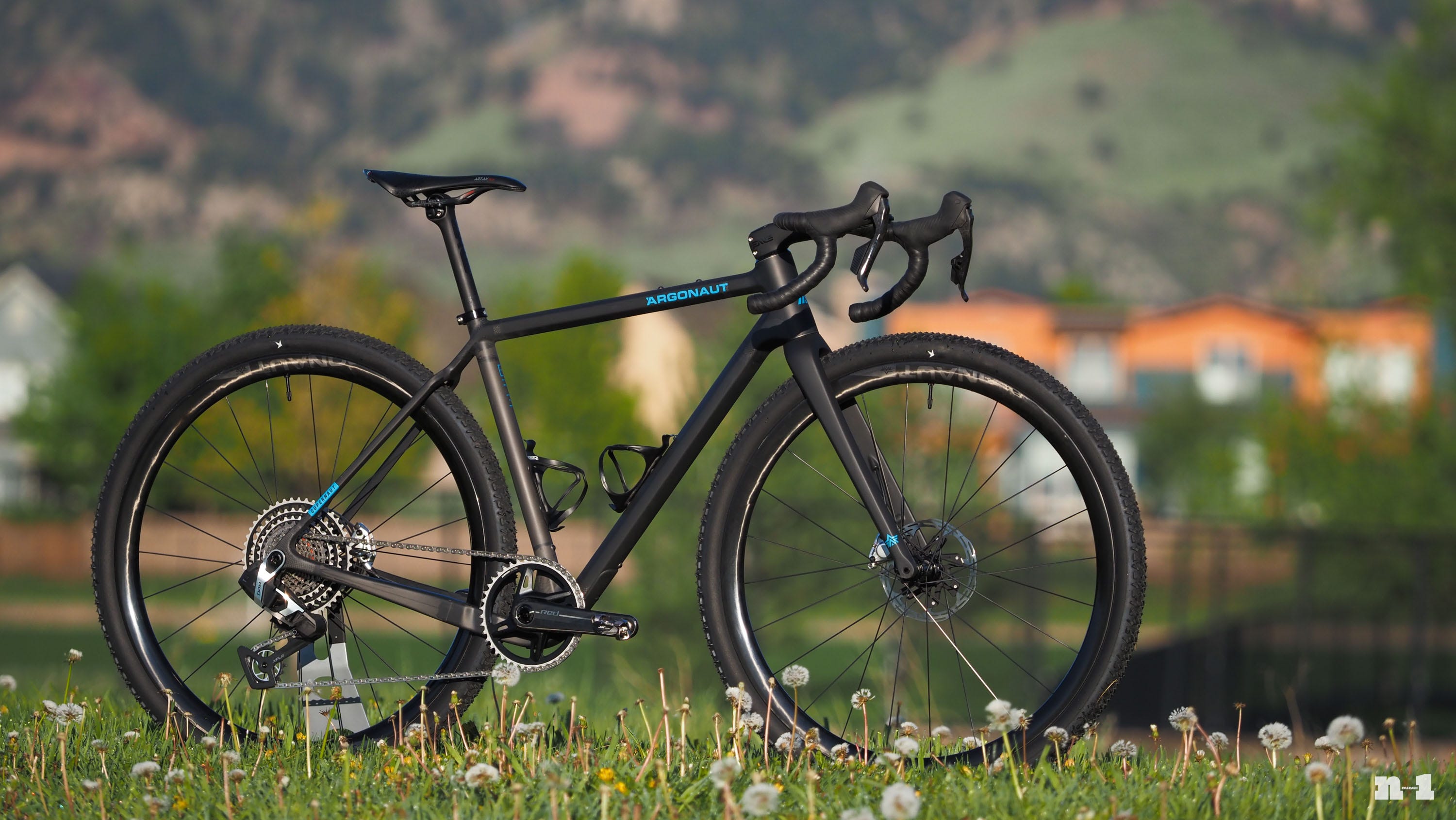
By and large, most of the super-fancy bikes you see are made of carbon fiber, and for good reason. It offers the best stiffness-to-weight ratio of all the common frame materials, it offers engineers an immense range of design flexibility in terms of tuning the material characteristics for a particular application, and mid-range options are constantly getting better and coming down in price. Carbon fiber manufacturing remains incredibly labor-intensive, however, and so barring some dramatic change in how these things are made, it seems unlikely that high-performance carbon fiber bikes will be truly inexpensive any time soon.
But what about aluminum?
I’ve always had a soft spot in my heart for good aluminum bikes, even in recent years as carbon fiber options have grown more affordable. Aluminum technology is incredibly mature with highly refined alloys and manufacturing techniques that the industry understands extremely well, the material is pretty darn light, it’s much less energy-intensive to produce than carbon fiber, and it offers outstanding value for the money (though less so recently with raw material costs skyrocketing since late 2025).
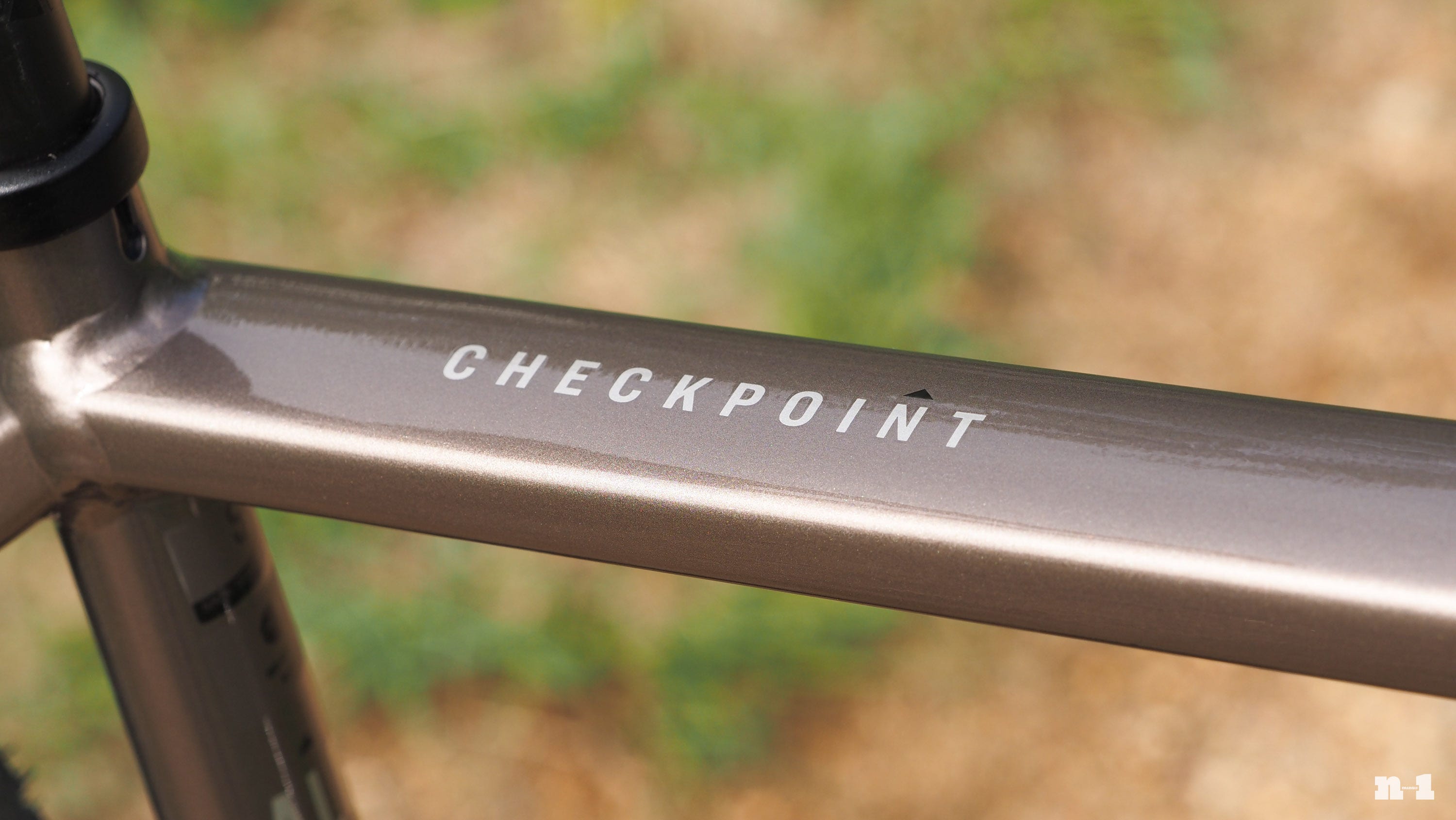
Even so, carbon fiber remains more desirable from a marketing point of view, and that decline in aluminum’s appeal unfortunately means we’re seeing fewer higher-end options made out of metal than we used to (Cannondale’s new CAAD14 being a notable exception). That said, there are good choices out there if you look hard enough, and one that’s long captured my attention is the Trek Checkpoint ALR.
Trek launched this third-generation Checkpoint ALR almost exactly a year ago, and it’s largely an evolution of the version that came before it. It’s still TIG-welded from Trek’s top-end 300 Series hydroformed aluminum tubeset, but the more elegant-looking tube shapes have been further massaged to extract even more tire clearance than before. The symmetrically dropped chainstays now have room for 50 mm-wide tires, and the new full-carbon fork – shared with the Checkpoint SL carbon model – offers the same clearance as well as a longer axle-to-crown dimension to accommodate suspension forks with up to 40 mm of travel without screwing up the handling.
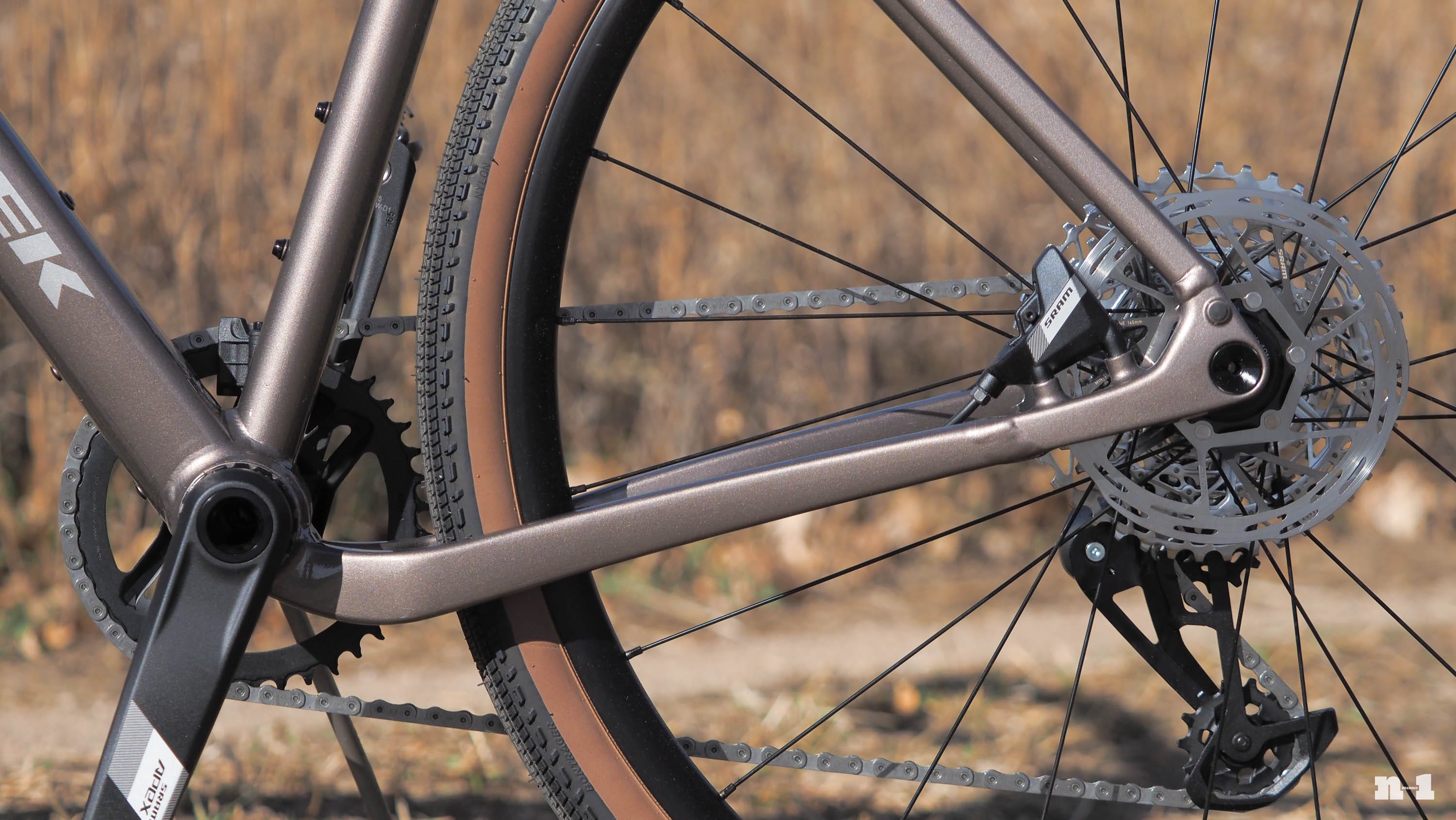
The rear dropouts are also newly UDH-compliant to expand the range of compatible drivetrain options, and cable routing has gone to a hidden setup with all the lines passing through the upper headset cover (including space for an internally routed dropper seatpost). If partially external routing is more your style, there’s a single multi-line port on the non-driveside of the down tube (more on this in a bit).
Trek still intends for the third-gen Checkpoint ALR to be an all-around gravel workhorse with heaps of accessory mounts, including front and rear fenders, front and rear racks, direct-mount frame bags, three-packs on the fork blades, and heaps of bottles. Moreover, the geometry has been adjusted with a 10 mm-taller stack and modestly shorter reach for a slightly more upright riding position that Trek feels is better suited to the bikepacking, adventure riding, and commuting it thinks this bike is likely to see.
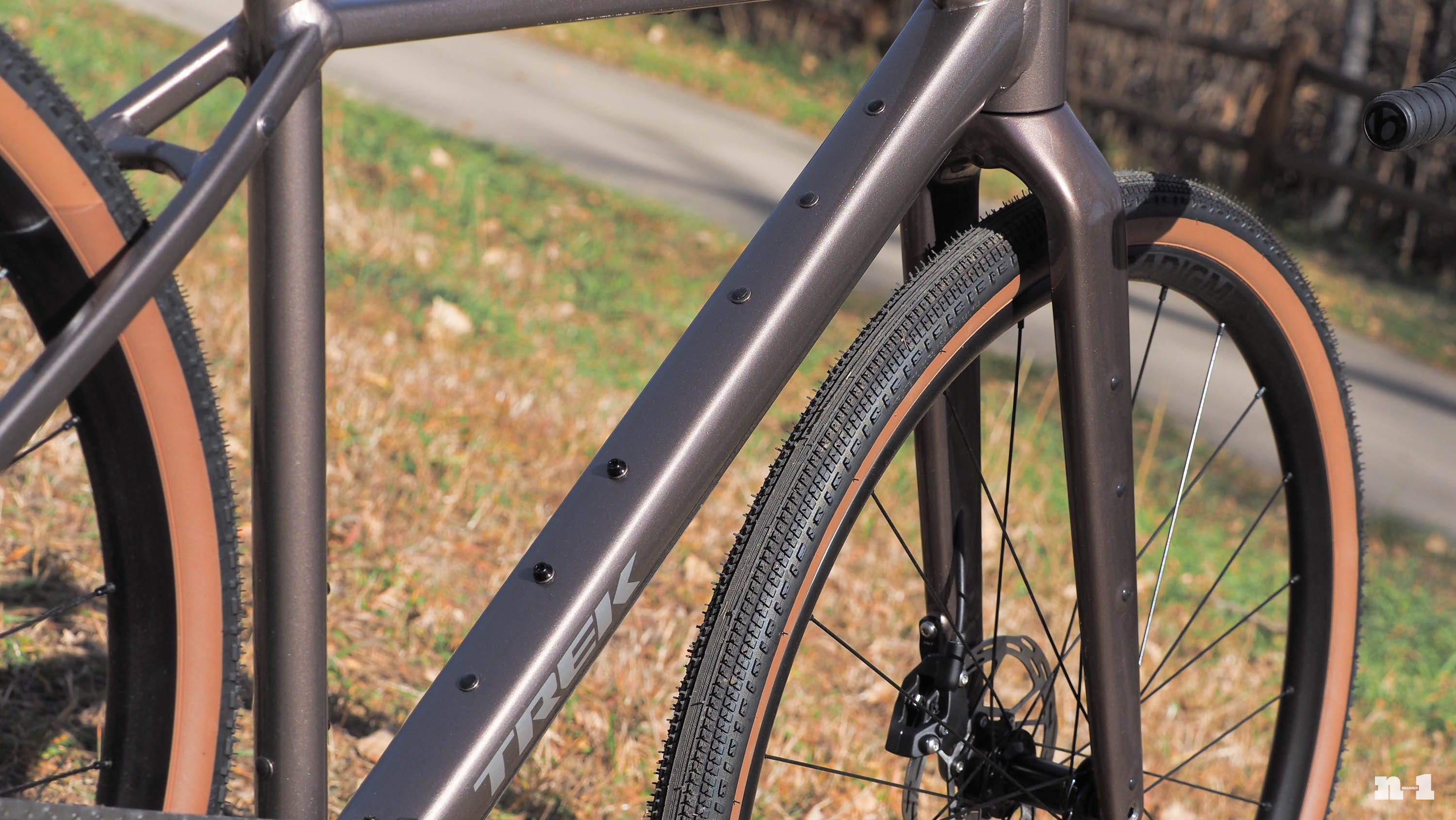
In essence, the Checkpoint ALR is billed as a more affordable and more multipurpose alternative to Trek’s entry-level carbon gravel models, and the emphasis is most definitely on affordability. Complete bikes start at just US$1,600 / £1,200 / €1,300 / AU$n/a, and even the top-end version comes in at US$2,300 / £1,700 / €2,000 / AU$3,000 – barely half the price of the least-expensive Checkpoint SL.
Yet even those inside Trek seem to understand the Checkpoint ALR’s budget performance appeal here as it’s also available as a bare frameset for just US$1,050 / £1,100 / €700 / AU$n/a.
In other words, Trek may not offer a complete version of the Checkpoint ALR with a nicer build straight out of the box, but its own employees seem to be practically begging people to dress this thing up with higher-end kit. Ever wondered what that sort of build might look (and feel) like? Wonder no more.
The build
I’d originally requested a bare frameset from Trek for this project, but as it turns out, I wasn’t the only one with this idea as they were sold out quickly after the bike was announced. Trek instead sent over a complete Checkpoint ALR 5 that I was free to strip down and rebuild as I saw fit. That obviously created more work on my end, but it also provided a convenient baseline for comparison.
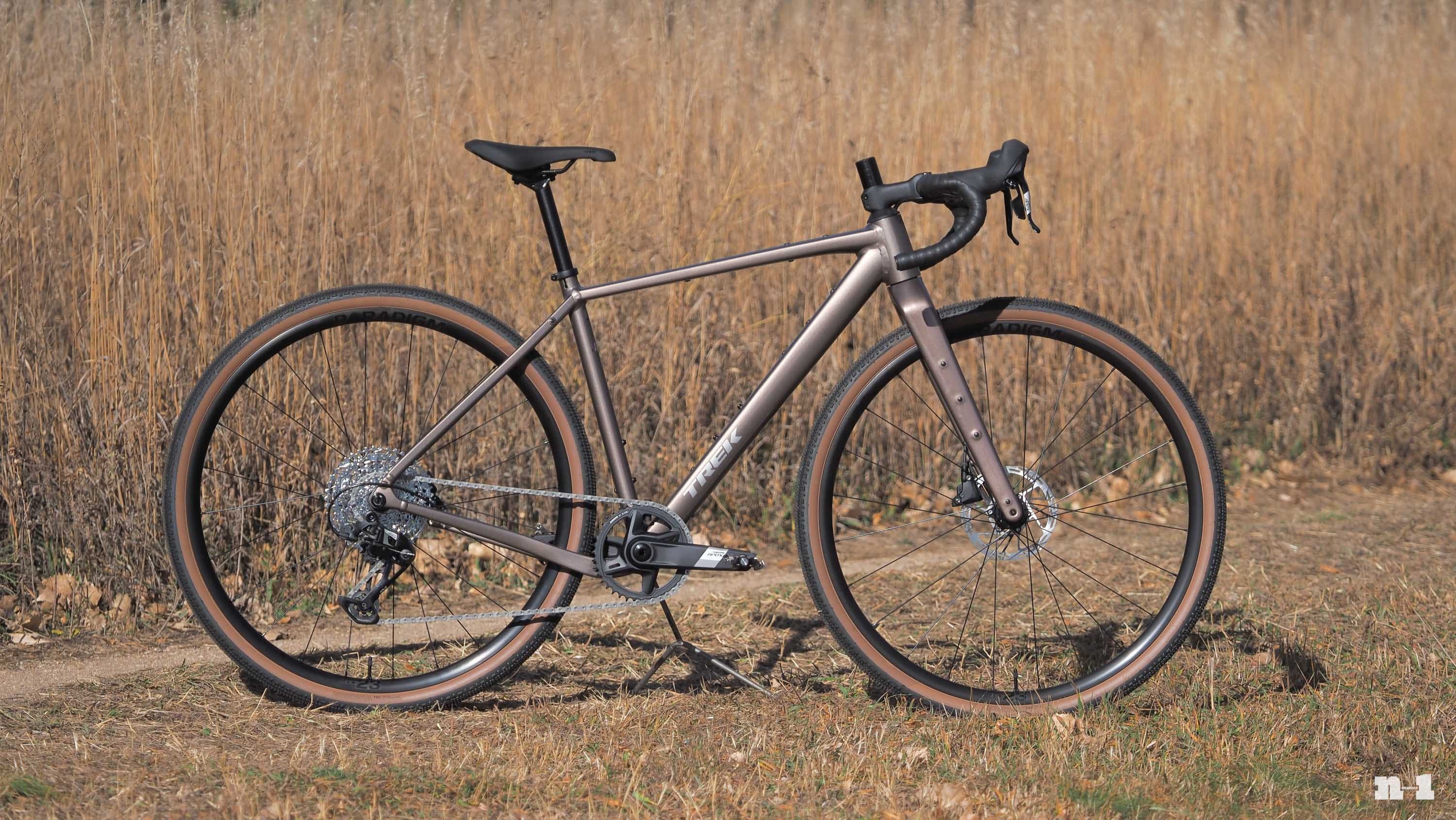
The stock Checkpoint ALR 5 is hardly a bad little bike at all. The SRAM Apex XPLR mechanical groupset shifts reliably and offers decent range with its 11-44T 12-speed cassette, and while the brakes don’t get the benefit of SRAM’s latest light-action lever architecture, they still provide ample power and the older-generation lever bodies are ergonomic enough.
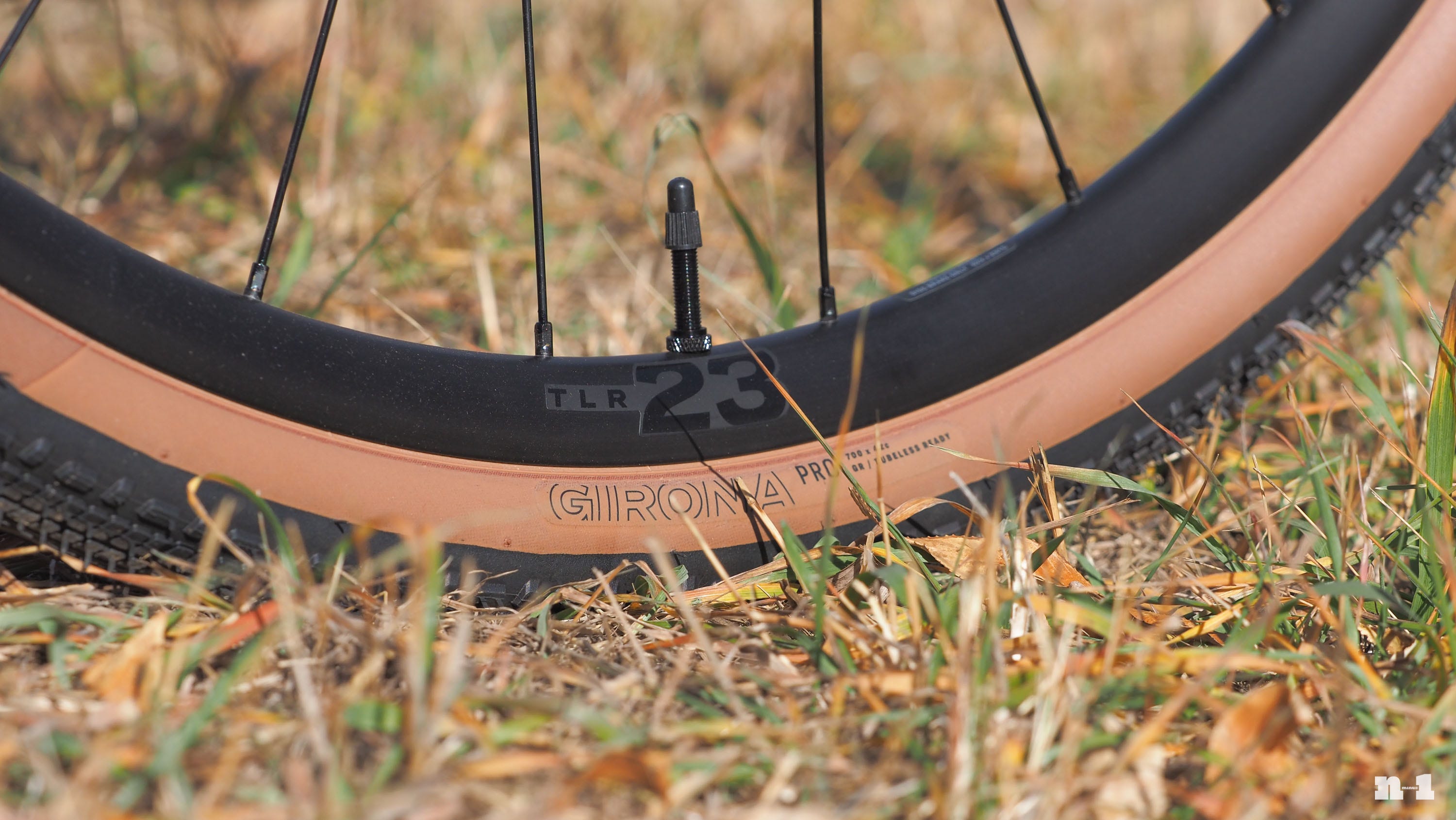
Wheels and tires are more of a mixed bag. The Bontrager Paradigm 23 aluminum rims aren’t especially wide at just 23 mm between the bead hooks, and they’re also pretty heavy at nearly 1,900 g per pair. Likewise, while the 42 mm-wide Bontrager Girona Pro tires incorporate the brand’s latest casing constructions and tread compounds, the size strikes me a bit too narrow given everything we know nowadays about gravel tire performance, plus they’re still rather slow-rolling and offer middling grip despite those recent upgrades.
The finishing kit left plenty of potential for improvement, too, at least out back. The Checkpoint ALR unfortunately doesn’t get the benefit of Trek’s impressively effective IsoSpeed pivoting seat cluster, which noticeably helps the seatpost (and seat tube) flex when hitting bumps. Adding IsoSpeed to the frame obviously isn’t an option, but given how much ride comfort comes directly from the seatpost, you can surely do better than the thick-walled (and heavy) aluminum post Trek uses here.
Overall, I had two major goals here with the reimagined spec: Drop some weight, and improve the bike’s overall performance and capability, all while sticking to a reasonable budget.
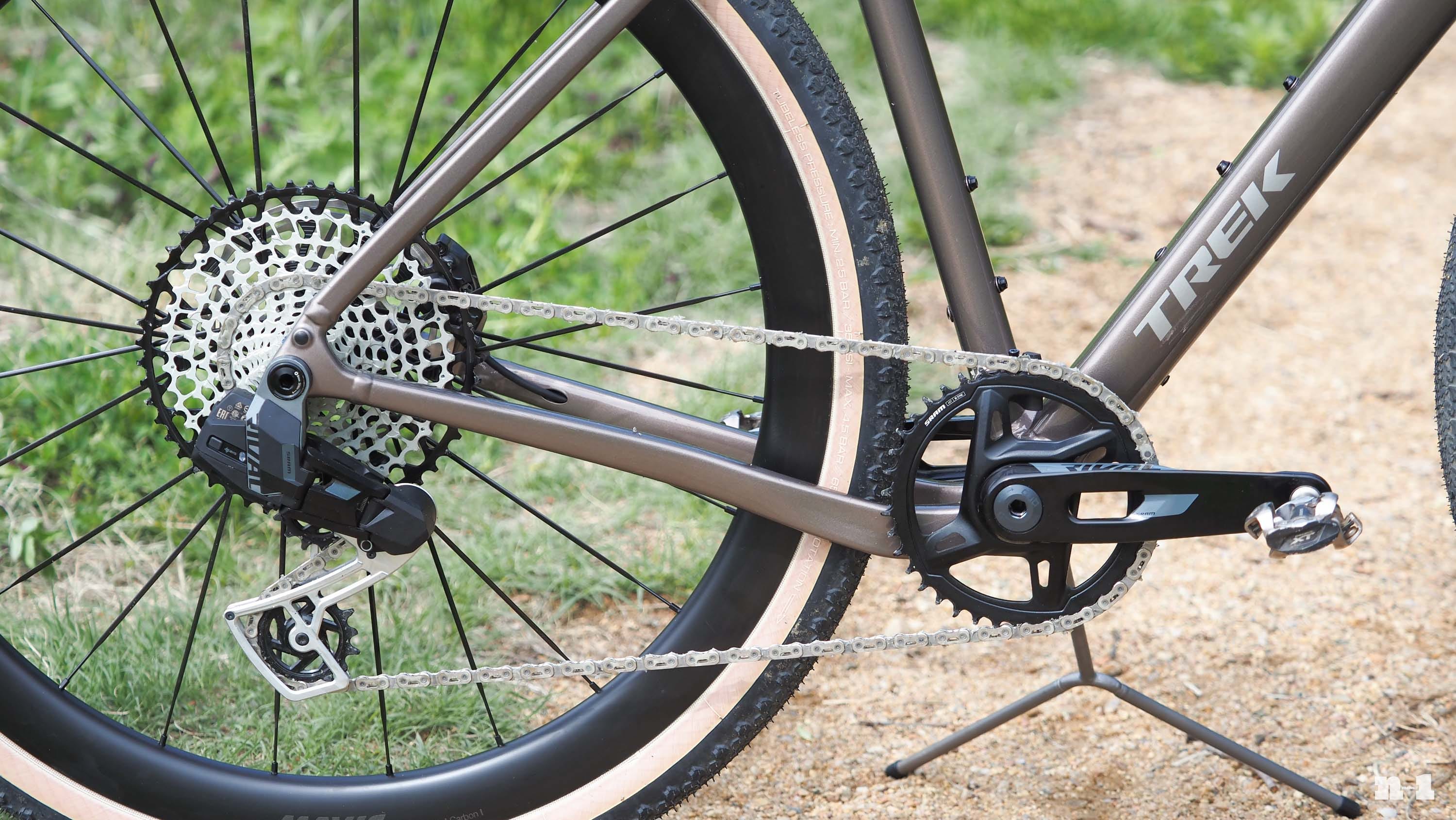
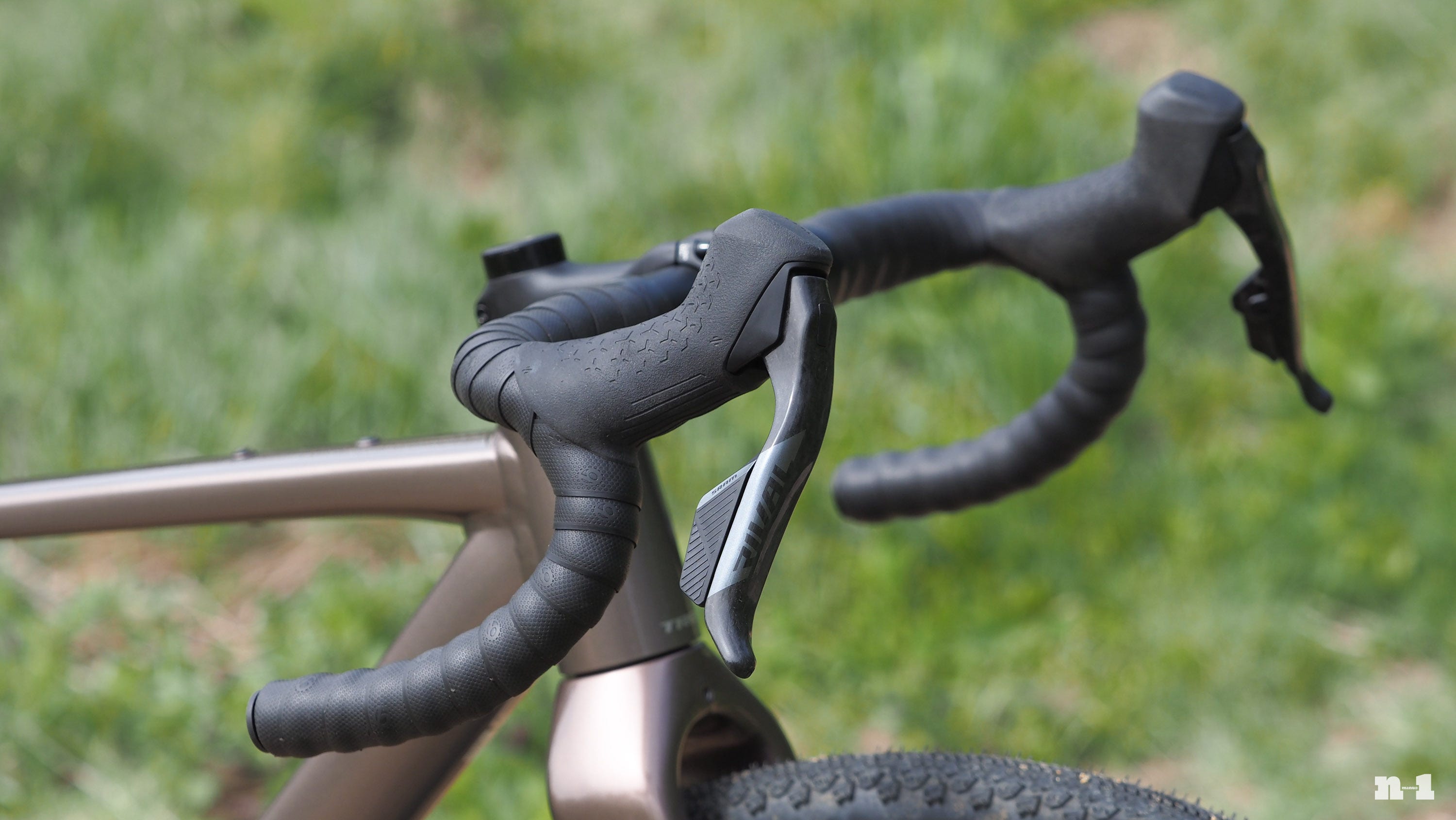
Much as I enjoy mechanical shifting myself, the reality is that electronic is ultimately what more people want. SRAM’s latest Rival XPLR AXS groupset was an easy choice, providing overall performance that’s nearly identical to the more expensive Force variant, but at a much lower price. I also knew I wanted more range than what the standard 10-46T 13-speed cassette would offer given my local mountainous terrain, so I augmented the stock cluster with a 13-speed 10-52T setup from Garbaruk, complete with its higher-capacity aluminum cage assembly.
I ended up sticking with the stock bar and stem since there isn’t usually much to gain performance-wise from upgrading either one without spending an inordinate amount of money. Bontrager’s Blendr system of accessory mounts integrated into the stem faceplate is also quite well done, I already knew I liked the bend and flare of the stock Bontrager Elite Gravel handlebar, and Trek also saw fit to add EVA foam cushions up top for added comfort (which I’d used before and knew I liked).
I did, however, swap to Trek’s midrange AirLoom Elite saddle with its supportive 3D-printed top and roughly 50-gram weight savings, and that boat anchor of a seatpost was replaced by a lighter (and much more compliant) FSA SL-K Light carbon setup.
Wheels and tires involved more experimentation.
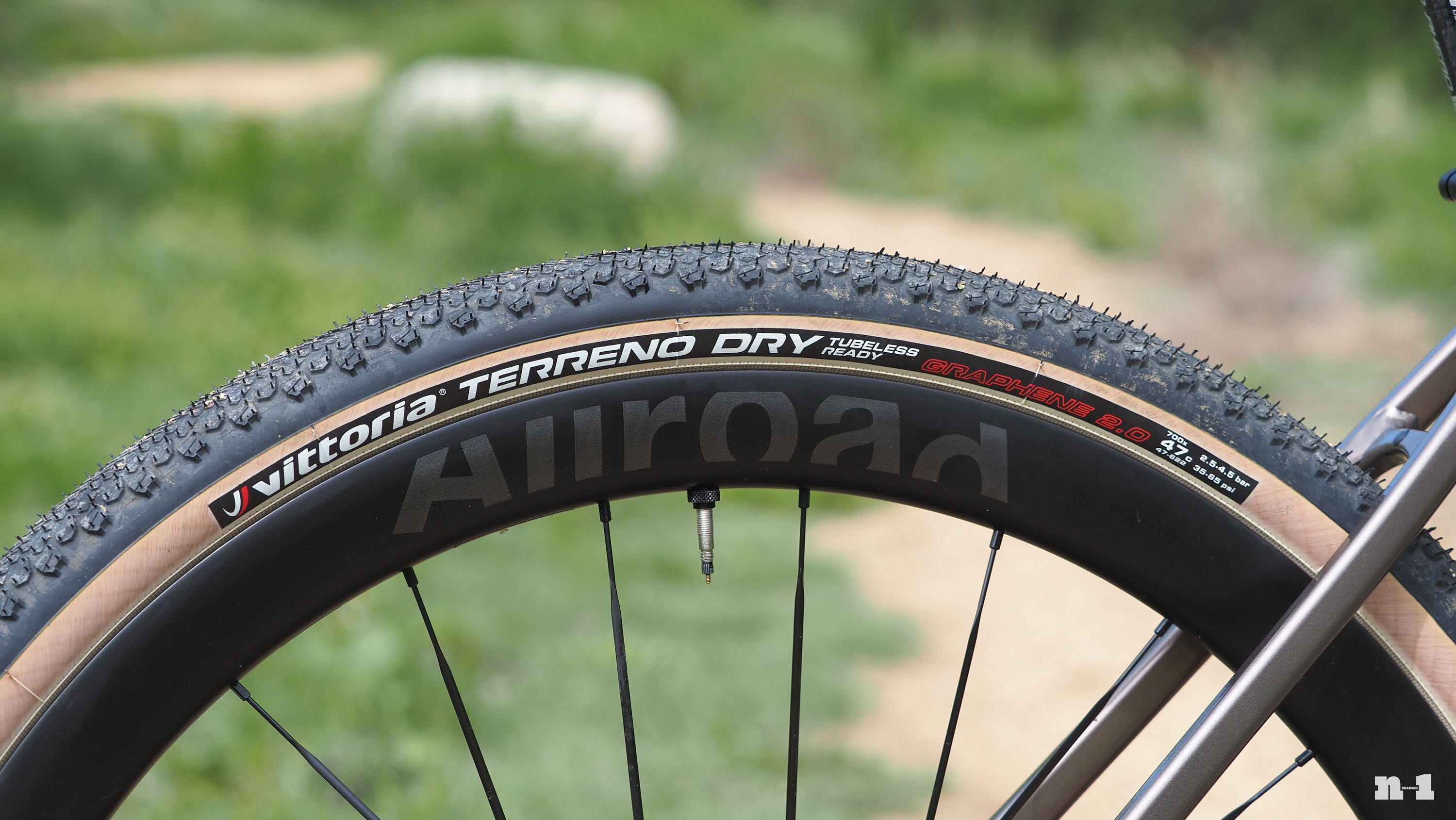
I knew right away that I wanted to max out (or at least come close to maxing out) the available tire clearance, and so I started with a set of Mavic Allroad SL Carbon wheels wrapped with 47 mm-wide Vittoria Terreno Dry tires as a single do-everything setup. But I also used a set of (recently discontinued) Bontrager Aeolus Pro 49V thermoplastic carbon wheels with 45 mm-wide Hutchinson Caracal Race tires for when I wanted to maximize speed on smoother terrain, while some shallow-profile WTB CZR i23 carbon wheels and 50 mm-wide Schwalbe G-One RX tires entered the rotation to maximize comfort on the rough stuff.
The stock Checkpoint ALR 5 I started with tipped the scales at 9.66 kg (21.30 lb) for a size small, set up tubeless, but without pedals or accessories. And after the rebuild? With the Mavic wheel setup, that figure dropped down to a sportier 9.12 kg (20.11 lb) – still not exactly a feather, but keep in mind that the Rival AXS XPLR groupset is anything but light, and remember that dropping weight wasn’t the only goal here.
That said, one nice surprise I discovered during the rebuild was that the frame was substantially lighter than expected. Trek’s official figures put a medium Checkpoint ALR frame at 1,878 g for a medium size with paint, plus 525 g for the fork. My test fork was nearly dead-on with claims at 520 g including the compression plug and with the steerer trimmed to 205 mm, but my small-sized loaner frame came in at just 1,620 g (3.57 lb) – about 200 g lighter than I’d anticipated given the different size, and only around 250 g heavier than the Checkpoint SL.
As it turns out based on subsequent conversations with Trek, that claimed figure is apparently some sort of typo on the product page as my measured weight is more in keeping with its own internal engineering drawings.
Is it flat?
Seeing as how I was going to strip the bike down, anyway, it was a perfect opportunity to check the manufacturing tolerances of the rear disc-brake caliper mounting pads. Sadly, they were… not great. Not only were they slightly off-angle, but they also looked like they had been gnawed by a beaver with very deep gouges typical of a unforgivably worn and/or dirty tool. I could get the brake to run without rubbing, but only just barely and with a fair amount of fiddling.
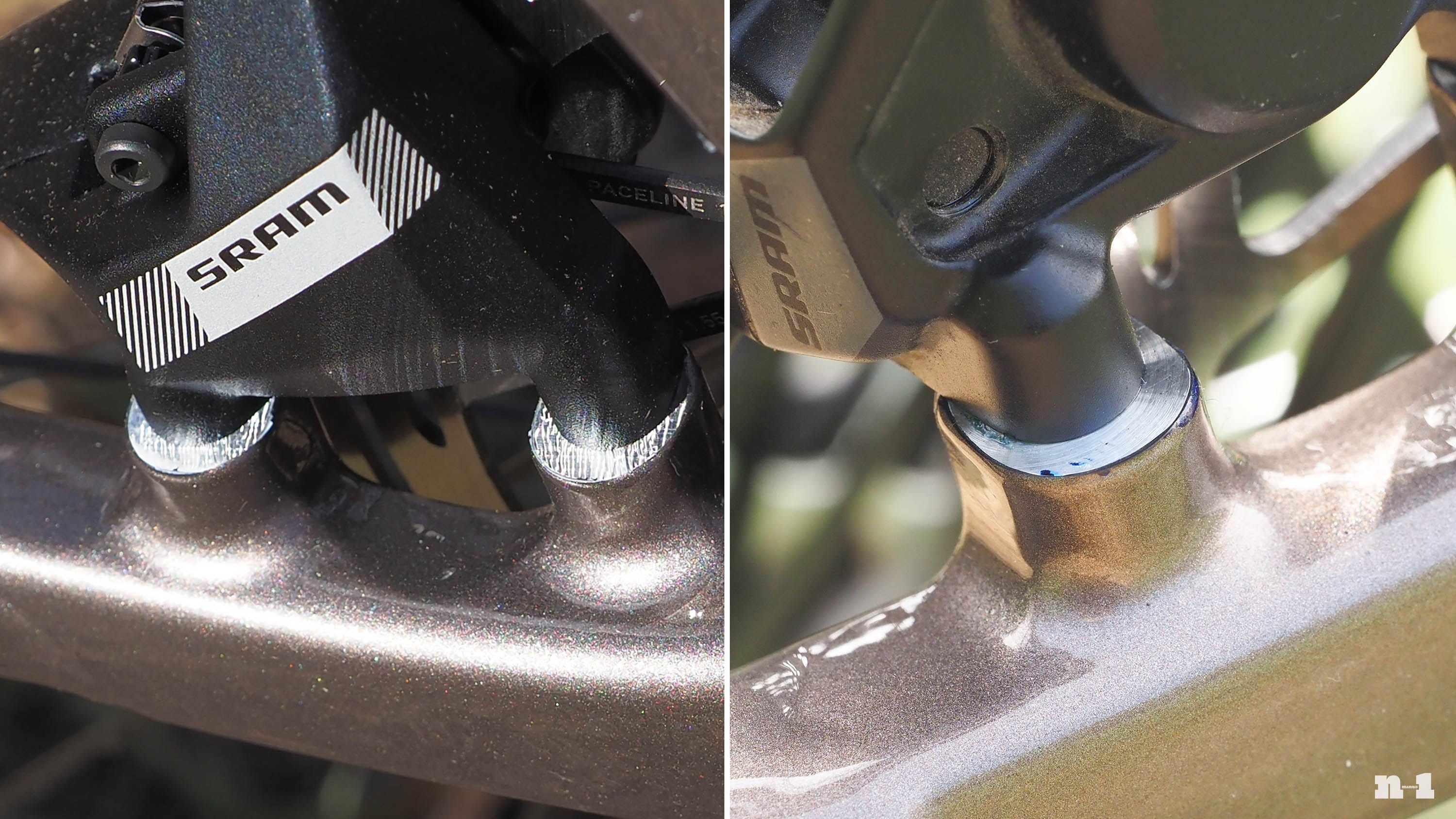
Thankfully my VAR disc tab facer made easy work of the situation, and Trek provides ample material so there was no fear of removing too much aluminum. Brake caliper setup afterward was as easy as could be – and lever feel improved dramatically – but this is definitely something that shouldn’t have to be done straight out of the box.
Sorry, Trek, but you only earned a C- on this one.
Ride report
With that all out of the way, it was time to hit the road and trail, and for the most part, the reimagined Checkpoint ALR was everything I’d hoped it’d be. It was clear many of the components on the stock Checkpoint ALR 5 were keeping the frameset from realizing its true potential, but even so, it was striking just how much better the end result turned out.
Keep reading with a 7-day free trial
Subscribe to n-1 to keep reading this post and get 7 days of free access to the full post archives.